On Monday, Oct. 20, a major outage at AWS (Amazon Web Services) disrupted over 1,000 websites and services, affecting millions of users globally. The outage affected platforms like Snapchat, Roblox, Fortnite, and Zoom, as well as streaming services such as Hulu, Prime Video, HBO Max, and Netflix. Financial and utility services, including Venmo, Robinhood, Coinbase, Chime, Lyft, Starbucks, and the McDonald’s app, were also impacted. Educational tools like Canvas, Blackboard, CollegeBoard, and Outlook were down as well, on a teacher workday.
According to AWS, the issue stemmed from a DNS (Domain Name System) error in the company’s US-East-1 location in Virginia, the company’s oldest and most critical data hub. The issue prevented systems from finding the correct digital addresses for various services, even though the data itself remained intact.
Cybersecurity researcher John Scott-Railton described the incident as a “domino effect,” also stating that the region serves as a backbone “for so many services that when things go screwy, domino effects around the internet-as-we-know-it are enormous,” he wrote in a social media post.
A single service’s small technical failure caused major disruptions to the basic things people rely on daily. Canvas crashed, disrupting learning and grading nationwide. Lloyds Bank customers lost access to their accounts. Some United Airlines flyers couldn’t check in or view their reservations. People’s alarms didn’t go off. There are too many examples to list—it was a full digital meltdown.
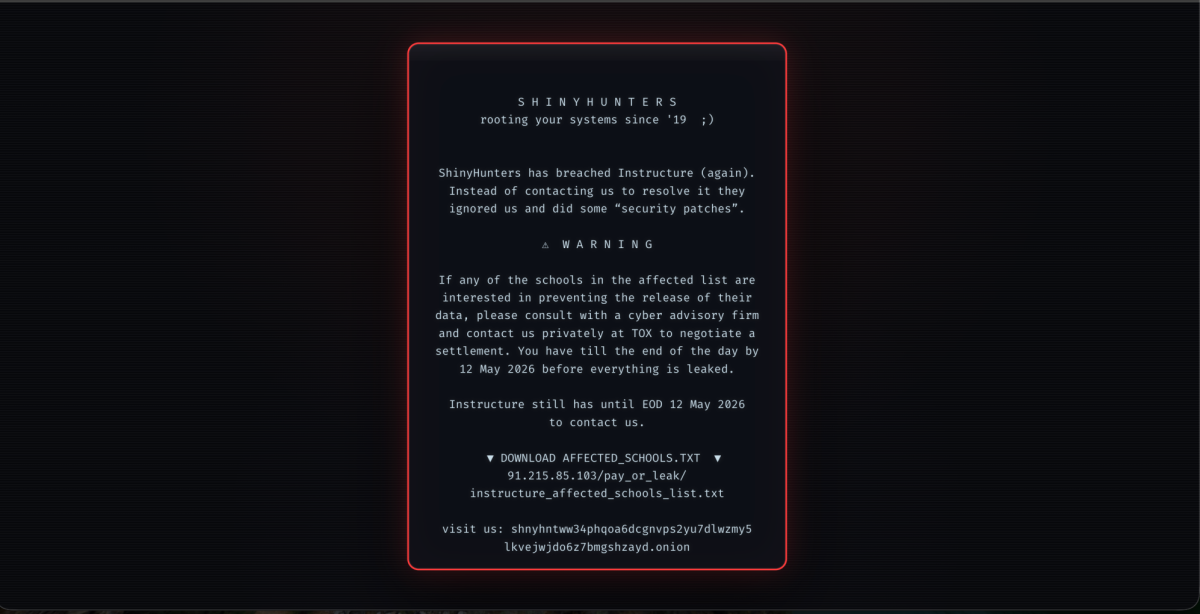
The outages hit schools especially hard. Students had Monday off for a teacher workday, but with Canvas, one of the most widely used learning platforms, unusable due to the outages, teachers were unable to post assignments, grade work, or even access lesson plans.
For students, the sudden errors caused confusion and stress as they couldn’t submit assignments or view upcoming deadlines. Many found themselves worried about late work due to the downtime.
“I couldn’t do Mr. Moore’s APUSH assignments,” shared junior Josh Kong. “I was kind of relieved when Canvas wasn’t working because it was like a three-day project, and that was the last day to do it. I hadn’t started it yet.”
Teachers also struggled to make the most of their workday.
“They set up team-building activities we had to sign up for, so we didn’t really have that much time to grade until the afternoon,” said Joe Williams, an English teacher here at Green Level. “The takeaway for me, not even from a teaching standpoint, but generally, is how we’ve gotten to a point where one outage at one company, Amazon Web Services, can make a huge percentage of America unable to work. It literally crashes our entire system. That should be really alarming.”
While Williams wasn’t affected in particular, the downtime impacted a lot of teachers.
“I know teachers who took the day off—literally using one of their personal days—to stay home and catch up on grading,” Williams said. “Then Canvas went down, and they couldn’t do anything. That’s got to be super frustrating because we only get a couple of personal days a year.”
The outage highlighted the global dependence on Amazon’s cloud infrastructure, which supports government agencies, universities, and major corporations. AWS provides tools and computing power that enable around a third of the internet to function, offering storage space and database management. This allows companies to avoid maintaining their own costly setups while also connecting massive amounts of traffic through AWS’s systems.
The disruption caused issues across multiple parts of the internet, from social media and online banking to education and entertainment, showing how essential AWS services are to people’s everyday lives worldwide.